Wagyu Grades Explained: Japanese A5 vs Australian MB9
Compare Japanese A4 and A5 with Australian MB5+ and MB9 wagyu, choose real Villa Market listings, and learn how to sear and serve richly marbled beef.
Short answer
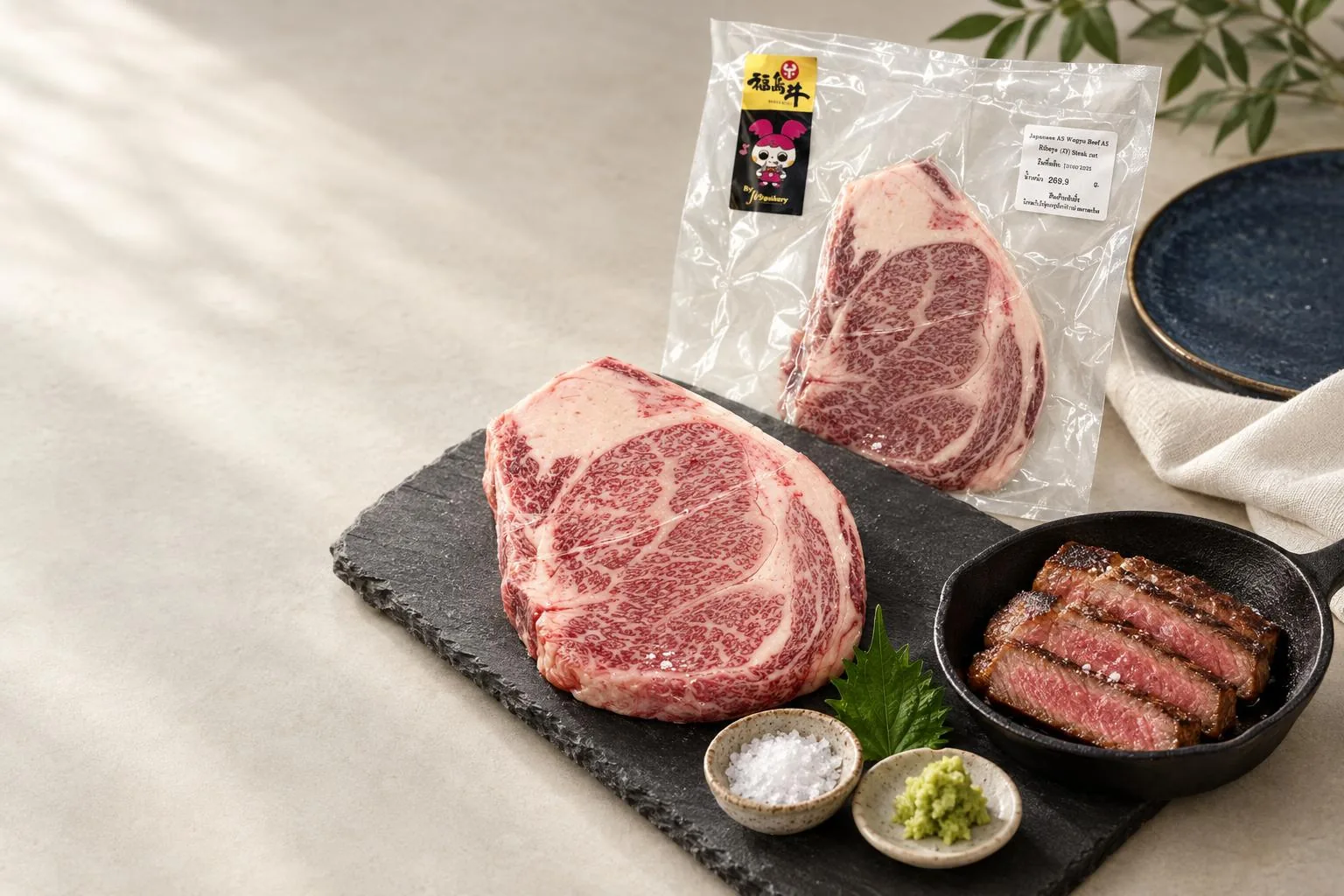
Japanese A4 and A5 combine a yield letter with a quality grade; Australian MB5+ and MB9 describe marbling. Choose by cut, visible marbling and how you want to serve it. Villa Market lists Japanese A5 ribeye alongside Australian wagyu. For rich cuts, sear briefly and serve thin slices in small portions.
How to read Japanese A4 and A5
A Japanese wagyu grade has two parts. Read the letter first, then the number, to understand what each tells you about the beef.
- A is the yield grade. It describes how much usable meat a carcass yields. A is the highest of the A, B and C yield categories.
- 4 or 5 is the quality grade. Marbling is a key criterion, and 5 is the highest quality grade. A4 and A5 share yield grade A, with A5 carrying the higher quality grade.
- BMS is the Japanese marbling assessment. It describes the fat marbling considered within Japanese grading; the final quality grade is the number you see alongside the yield letter.
At the counter, start with the grade, then look at the piece itself. The cut and thickness help you decide whether to serve quick-seared slices or cook a whole steak for sharing.
Australian MB5+ to MB9+: what are you comparing?
Australian MB labels describe marble scores. Within the same system, a higher score indicates more marbling. Japanese A5 and Australian MB9 describe different things: one combines yield and quality, while the other focuses on marbling.
Read the full score on the product description. Villa's Australian ribeye is labelled MB5+, and the Westholme striploin is labelled MB8-9. Those are useful details when choosing between the two, alongside the cut and pack size.
| Label | What it tells you | Good to know |
|---|---|---|
| Japanese A4 | Yield grade A and quality grade 4 | Available as a ribeye steak cut |
| Japanese A5 | Yield grade A and quality grade 5 | Choose sliced ribeye or a steak cut |
| Australian MB5+ | The stated marble-score designation | Villa's listing is a 300 g ribeye |
| Australian MB8-9 | The stated marble-score range | Westholme's listing is a 500 g striploin |
| Tajima wagyu | The product name | Villa's Tajima ribeye comes from Australia |
Taste and texture: choose for the meal
Marbling gives wagyu its rich flavour and tender texture. Villa Market's wagyu guide highlights the well-distributed fat in Japanese wagyu and the balance of fat and meat in Australian wagyu. Think about how much richness you enjoy and the sort of meal you want to cook.
For a small tasting course, Japanese A5 ribeye slices are a practical choice: briefly sear a few pieces and serve a small portion. If you enjoy cooking a whole ribeye, Australian MB5+ works with our pan-seared steak method, using the lighter butter finish suggested for wagyu.
For another Australian option, look at Westholme MB8-9 striploin. It brings a higher stated marble-score range in a different cut. Japanese A4 ribeye is also worth a look, especially if you want to compare A4 and A5 in the same cut.
Start with the way you like to eat steak, then choose the grade and format to match. A shared plate of thin slices is a simple way to enjoy richly marbled beef.
Real wagyu listings at Villa Market
These six listings were checked on 30 October 2026. Use the cut, grade and listed pack size to plan your meal.
- FG Japanese A5 ribeye, sliced, 200 g — 272106. Ready-sliced ribeye for a quick sear and small tasting portions.
- FG Japanese A5 ribeye, steak cut, 500 g — 272104. A whole-steak format to sear, rest and slice for sharing. Choose the cooking time to suit its thickness.
- FG Japanese A4 ribeye, steak cut, 500 g — 272103. An A4 option in the same cut and listed size as the A5 steak.
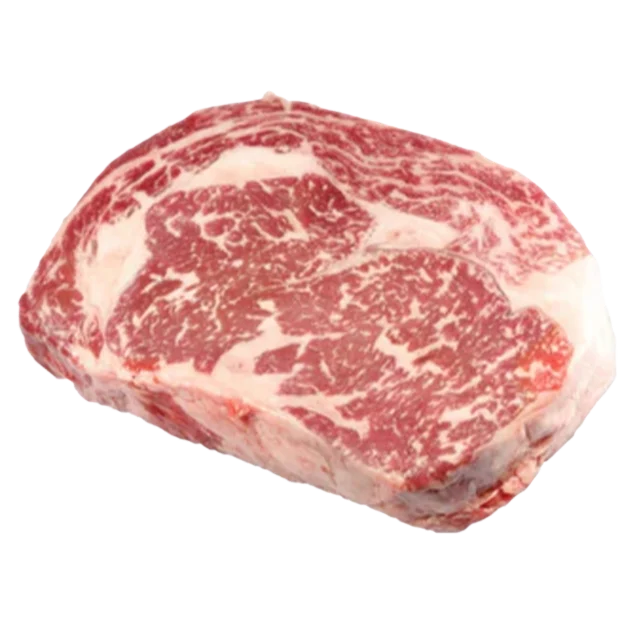
- Australian wagyu ribeye MB5+, 300 g — 206481. A ribeye with its MB5+ score stated in Villa's product details; a useful starting point for our steak recipe.
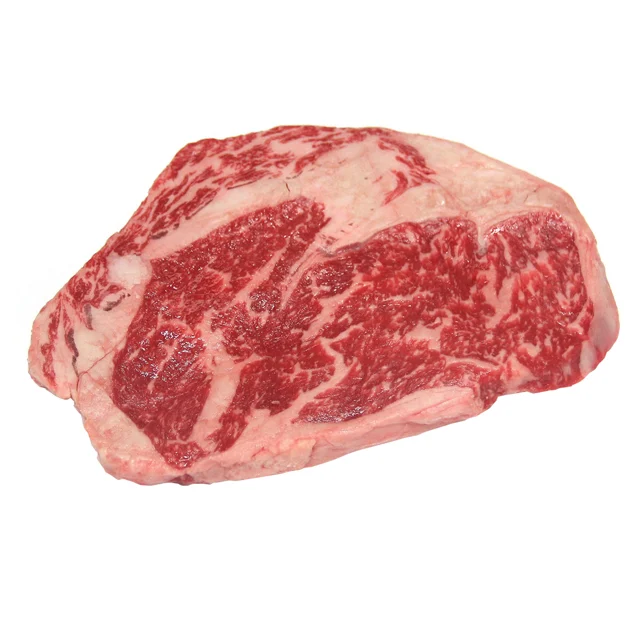
- Tajima wagyu ribeye, 300 g — 251049. Australian wagyu with the fine marbling highlighted in Villa's description. Keep the finish light and slice for sharing.
- Westholme wagyu striploin MB8-9, 500 g — 275391. Australian striploin with an MB8-9 label, for those who want to explore a different cut.
Available at Villa Market
Products in this article
Real listings from the Villa Market online shop · in store and online
 Australian Wagyu Ribeye MB5+300 g
 Tajima Wagyu Ribeye300 g
How to cook each format
Our pan-seared ribeye with herb butter takes you through drying, seasoning, searing and resting a steak. For wagyu, keep the sear brief, reduce the butter and serve thinner slices in smaller portions. Use the thickness of the meat to guide your timing.
- Thin Japanese A5 ribeye slices: sear briefly in small batches. Keep the finish simple so the beef stays at the centre of the dish.
- Japanese A4 or A5 steak cuts: pat the surface dry and season before searing. Follow the recipe's wagyu adjustment, with less butter and cooking tailored to the steak's thickness.
- Australian MB5+ ribeye: use the ribeye preparation and a lighter butter finish. Check the centre temperature as you cook, then rest before slicing.
- Australian MB8-9 striploin or finely marbled Tajima ribeye: use the same brief-sear, lighter-butter approach. Slice thinly for the table and start with a small serving.
For whole steaks, follow the recipe's temperature and food-safety notes, along with the pack's handling instructions. Thin slices need a much shorter sear than the thick ribeye used in the recipe.
The range varies by store; check with your nearest Villa Market through the store finder.
Cook with it: Pan-Seared Imported Ribeye with Herb Butter
Frequently asked questions
Is Japanese A5 the same as Australian MB9?
They describe different things. A5 combines a Japanese yield grade and quality grade, while MB9 describes an Australian marble score.
What is the difference between A4 and A5 wagyu?
Both have yield grade A, while A5 has a higher Japanese quality grade than A4. Marbling is a key grading criterion.
Where does Villa Market's Tajima wagyu come from?
Tajima wagyu ribeye, listing 251049, comes from Australia. Villa's description highlights its fine marbling.
How should I cook richly marbled wagyu?
Sear it briefly, use less butter than for a conventional ribeye, and serve thinner slices in smaller portions. Adjust the cooking time to the thickness of the cut.
Where can I buy A5 wagyu in Bangkok?
Villa Market lists Japanese A5 ribeye in sliced and steak-cut formats at shop.villamarket.com.
Sources
- Villa Market: Why is A5 Wagyu expensive? (Japanese grading and marbling)
- Villa Market: Japanese A5 ribeye, sliced 200 g (active listing checked 30 October 2026)
- Villa Market: Japanese A5 ribeye, steak cut 500 g (active listing checked 30 October 2026)
- Villa Market: Japanese A4 ribeye, steak cut 500 g (active listing checked 30 October 2026)
- Villa Market: Australian wagyu ribeye MB5+, 300 g (active listing checked 30 October 2026)
- Villa Market: Australian Tajima wagyu ribeye, 300 g (active listing checked 30 October 2026)
- Villa Market: Westholme wagyu striploin MB8-9, 500 g (active listing checked 30 October 2026)
- Villa Market: Pan-Seared Imported Ribeye with Herb Butter (cooking method and wagyu adjustments)
Written by the Villa Market editorial team. Product facts are checked against our online shop and the packs themselves. Images marked “AI illustration” are generated with AI from real product photos. Range and availability vary by store.